We spend a lot of time thinking about how our mood affects our cravings. Every Monday, we share some of what goes on inside Cookthink as we’re analyzing recipes for the Cookthink database. The subject of this week’s Root Source is apple cider, which inspired us to think about what “vinegary” tastes like.
Calling something vinegary can be an insult — a sign that the salad dressing is too sharp, the wine is edging past its prime, that the substance in question is out of balance or has simply gone sour. But it can also be a compliment: a taste of vinegar gives a dish a shot in the arm and keeps the taste buds nervous and excited.

Claire describes vinegary as “something acidic but not bright like actual citrus.” Red wine vinegar has a sharpness that makes it the essence of vinegary; balsamic vinegar is more memorable for its sweetness than its acidity. Vinegar stands up to the oil in a salad dressing to keep the flavors balanced and lively. The spiciness of sriracha and sambal is enhanced by a vinegary taste that straight hot peppers lack; vinegar makes Worcestershire’s savoriness piquant.
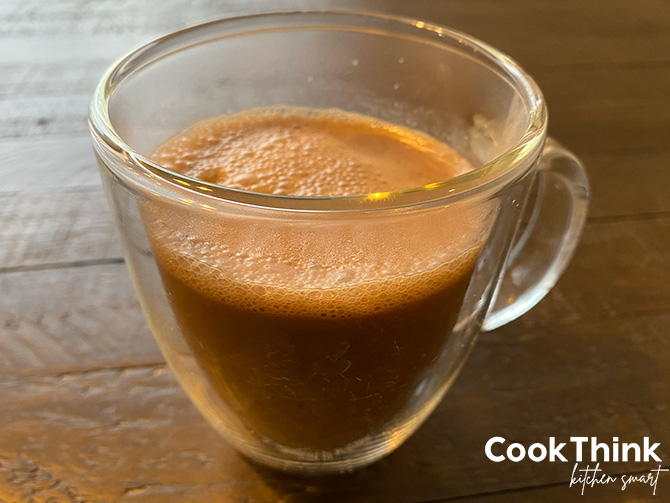
And it’s the acidity in apple cider that makes it taste vinegary — a pleasing sharpness that takes the edge off of sweet and distinguishes it from mere apple juice. The pleasingly pert taste of quick-pickled vegetables comes from vinegar doing a dance with a bit of added sugar.

Brys says he loves to use vinegars “to brighten and accentuate the flavors of just about anything. Stirred into stews at the very end, drizzled over a burrito (in the form of hot sauce), added to a sauté or a stir-fry, and even tossed into leftover canned beans to keep them fresh in the fridge.”
In fact, a bit of vinegar can rescue earthy beans from dullness. I can’t eat a bowl of lentil soup without first adding a spoonful of vinegar to it.
What puts you in the mood for something vinegary?